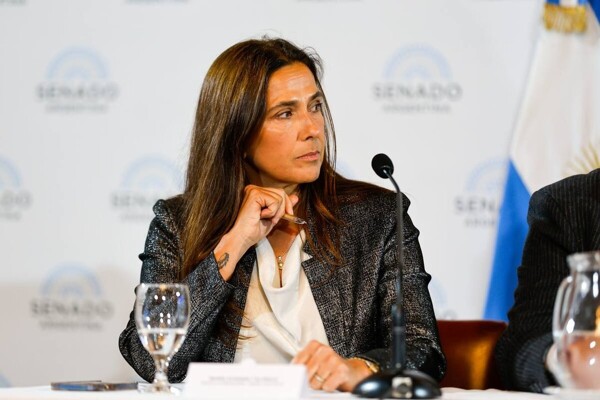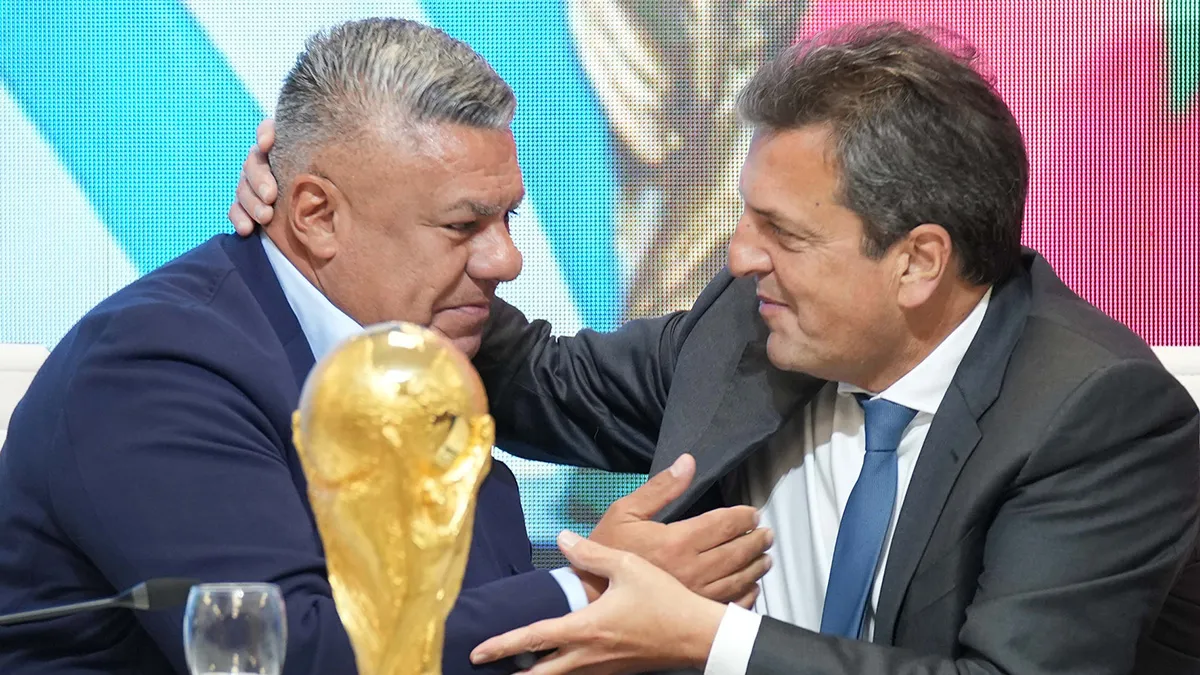
Buenos Aires, February 1, 2026 – The former vice president of the Financial Information Unit (UIF), María Eugenia Talerico, denounced the existence of a systemic corruption scheme that, she affirmed, links the Argentine Football Association (AFA) to financial structures used for the irregular movement of currencies, money laundering, and political financing, with direct ramifications in the so-called 'massismo' and the functioning of the Central Bank of the Argentine Republic. In radio statements, the former official stated that the scheme is supported by cross-contracts, the use of financial entities, and parallel dollarization mechanisms, which would have operated with political backing over recent years. As she explained, clubs avoid speaking out against the denunciations for fear of sanctions, loss of benefits, or arbitrary punishments, in a context of strong power concentration in the leadership of the AFA, headed by Claudio 'Chiqui' Tapia. The former vice president of the UIF warned that the operation under analysis is not limited to the financial sphere but also includes judicial maneuvers aimed at conditioning sensitive investigations. In this framework, she stated that the fear of FIFA sanctions, especially on the eve of the next World Cup, acts as a deterrent factor for making substantive decisions. 'It is very complex to know what is going to happen because there is an incredible internal struggle, which is expressed in these permanent frictions over whether to advance to the consequences or not,' warned the former official, who emphasized that Argentine football has become a space of power capable of conditioning political and judicial decisions. Finally, Talerico questioned the inaction of emblematic figures of Argentine football, including members of the National Team, in the face of corruption allegations. Among these, she mentioned strategies to modify institutional addresses or displace jurisdictions with the objective of choosing more favorable courts and judges, a practice that is already under scrutiny in cases linked to the AFA leadership and companies operating with commercial rights and international contracts. According to judicial and administrative information known in recent months, several of these investigations include the analysis of financial dollar flows, overseas marketing contracts, and links with societies constituted abroad, elements that reinforce suspicions of asset laundering and evasion of anti-laundering controls. Talerico also stressed that the progress of these cases is conditioned by a deep internal struggle within the national Government, where —according to her diagnosis— sectors that promote a thorough investigation coexist with others that fear the political, institutional, and sporting impact of a potential intervention in the AFA. In this context, she pointed to former Economy Minister Sergio Massa as a central figure in the network and harshly questioned the role of the Central Bank in providing dollars to the informal financial system. 'The management of the Central Bank is scandalous as one of the providers of dollars for financial companies,' she stated. Talerico also focused on the leadership of Argentine football, which she described as immersed in a 'corporate silence' sustained by the fear of sporting, economic, or institutional reprisals. In this sense, she posed a question that resonated strongly in the sporting and political sphere: 'What attitude should the best football player in the world take in the face of such a corruption scandal?', alluding to the symbolic impact that a public stance by the sport's main figures could have. The statements of the former UIF vice president add to a series of ongoing judicial and administrative investigations that place the AFA and its environment under increasing institutional pressure, in a scenario where the intersection of football, finance, and politics returns to the center of the public debate.